
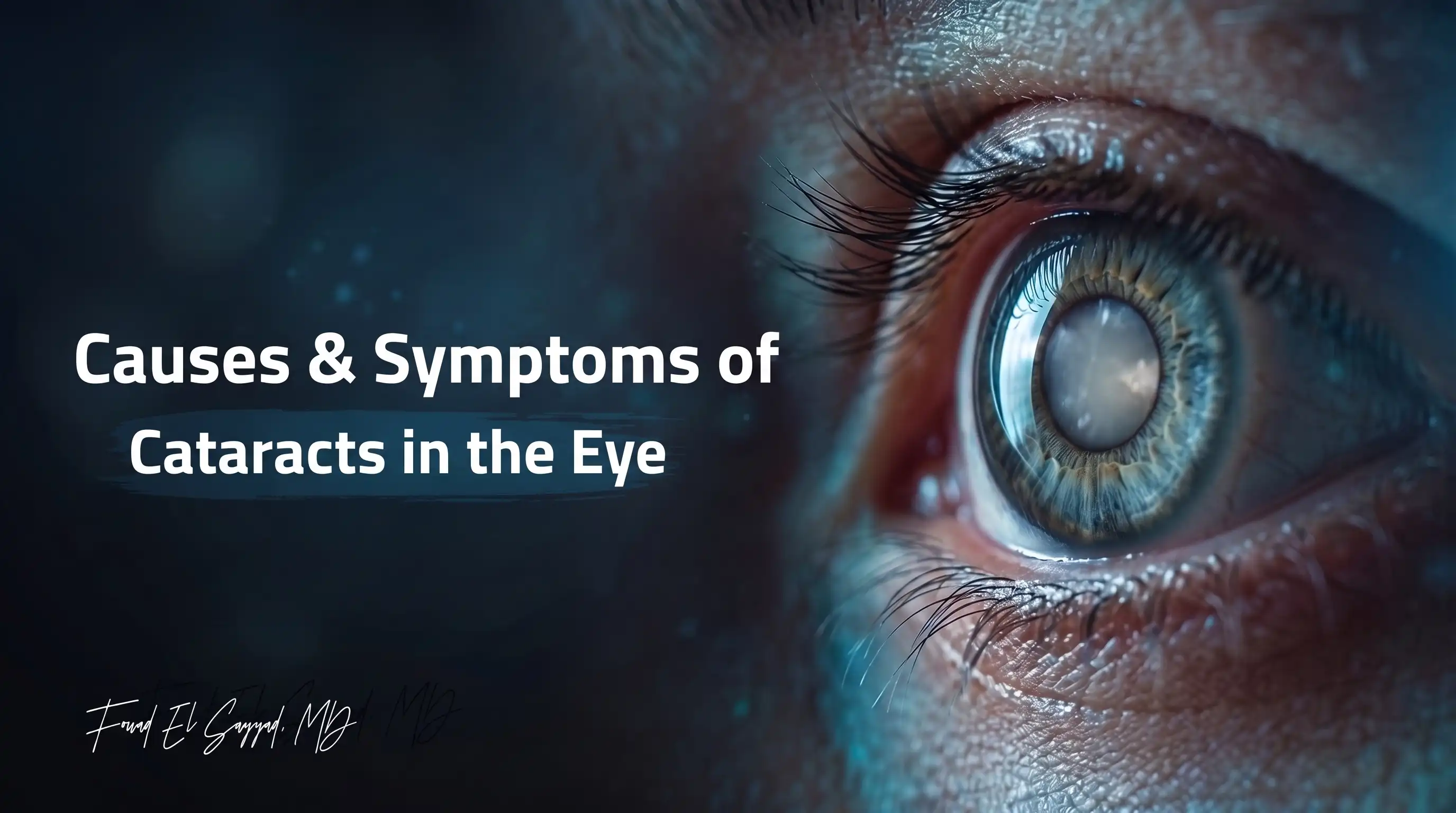
Quick answer: A cataract is a clouding of the eye’s natural lens. Most cataracts are caused by ageing, but diabetes, smoking, long-term steroid use, eye injury, previous eye surgery and strong sunlight exposure can make them appear earlier or progress faster. Early symptoms include blurred or hazy vision, glare from lights at night, faded colours and frequent changes in glasses.
Key Takeaways
- Cataract is the leading cause of reversible blindness worldwide.
- Most cataracts are age-related and develop slowly over years.
- Diabetes, smoking, steroid medicines, eye injury and ultraviolet light increase the risk.
- Glare at night, faded colours and frequent changes in glasses are common early signs.
- A cataract cannot be cleared with drops; surgery is the only effective treatment when it affects daily life.
What Is a Cataract?
The lens of the eye sits behind the coloured iris and focuses light onto the retina. It is made mostly of water and carefully arranged proteins. With time, these proteins clump together and the lens becomes cloudy and often yellow-brown. Light then scatters instead of focusing sharply, so vision becomes blurred and dull. According to the Global Burden of Disease study, cataract remains the leading cause of reversible blindness worldwide: the vision it takes away can usually be restored with surgery.
What Are the Early Symptoms of a Cataract?
- Blurred, cloudy or “foggy” vision that glasses do not fully correct
- Glare and halos around car headlights and street lights, especially at night
- Colours that look faded or yellowish
- Needing more light to read
- Frequent changes in your glasses prescription; some people suddenly read better without glasses (“second sight”)
- Double vision in one eye
Cataracts are usually painless. Sudden pain, redness or a sudden drop in vision are not typical of a cataract and need urgent care.
What Are the Types of Cataract?
| Type | Where it forms | Typical effect |
|---|---|---|
| Nuclear | Centre of the lens | Slow blurring of distance vision, yellowing of colours, often a change towards nearsightedness |
| Cortical | Outer layer of the lens, in spokes | Glare and halos, especially at night |
| Posterior subcapsular | Back surface of the lens | Glare and difficulty reading, often earlier in life; linked to diabetes and steroids |
| Congenital or childhood | Present at birth or in childhood | Can affect visual development and needs early specialist care |
| Secondary | After injury, inflammation or eye surgery | Varies; may progress faster |
What Causes Cataracts?
- Ageing: the most common cause; most people develop some lens changes after 60.
- Diabetes: raised blood sugar changes the lens and can bring cataract on earlier.
- Smoking: a meta-analysis of observational studies found a higher risk of cataract in smokers, especially nuclear cataract.
- Steroid medicines: long-term steroid tablets, inhalers or eye drops are linked to posterior subcapsular cataract.
- Ultraviolet light: long-term strong sunlight exposure without eye protection.
- Eye injury, inflammation (uveitis) or previous eye surgery, such as retinal surgery.
- High nearsightedness and some genetic and systemic conditions.
Who Is Most at Risk?
Anyone over 60, people with diabetes, smokers, people who have taken steroids for long periods, and anyone with a previous eye injury or eye surgery. A family history of early cataract also matters. In Egypt and the Gulf, strong sunlight and diabetes are particularly important, so good sunglasses and good diabetes control are sensible protection.
How Is a Cataract Diagnosed?
A cataract is diagnosed with a slit-lamp examination after dilating the pupil. I also check the cornea, the retina and the optic nerve, because other conditions can cause similar symptoms and affect the result of surgery. When surgery is planned, the eye is measured with the ZEISS IOLMaster 700.
Can You Prevent or Slow a Cataract?
There is no proven way to prevent age-related cataract completely, but some steps are linked with a lower risk or slower progression:
- Control your diabetes: people with diabetes tend to develop cataracts earlier, and poorly controlled blood sugar is linked with earlier and faster-progressing cataracts. Good, steady control of blood sugar protects both the lens and the retina.
- Protect your eyes from the sun: a 2021 meta-analysis found that more sunlight exposure is linked with a higher risk of age-related cataract, especially cortical cataract. Wearing sunglasses that block ultraviolet light, and a hat outdoors, is a sensible and low-cost step, although no trial has proven that sunglasses prevent cataract.
- Stop smoking: smoking is linked with a higher risk of cataract, especially nuclear cataract.
- Use steroid medicines only under medical supervision: long-term steroid tablets, inhalers or eye drops can bring on cataract.
- Protect your eyes from injury at work and during sports.
- Have regular eye examinations, especially if you have diabetes or are over 60.
No eye drops or supplements have been proven to dissolve or reverse a cataract. Read can cataracts be treated without surgery?
When Should You See a Doctor?
See an eye doctor if your vision is blurred, glare makes night driving difficult, or your glasses no longer help. Whether and when surgery is needed depends on how the cataract affects your life. Read when cataract surgery is needed and the complete guide to cataract surgery.
What Patients Say (Google Reviews)
I have been dealing with Sayyad Eye Center since 2024 and have had two cataract operations. Dr. Fouad is a truly wonderful person, and there is a precise system in place, whether in New Cairo or Mohandeseen.
Google review · Sayyad Eye Center, New Cairo · February 2026 · translated from Arabic
Where Does Dr. Fouad El Sayyad See Patients?
- Sayyad Eye Center, Mohandeseen (main branch, where cataract surgery is performed): 3A Gameat El Dowal El Arabeya St., Sphinx Square.
- Sayyad Eye Center, New Cairo: Medical Park 2, opposite New Cairo Court.
To book an appointment with Dr. Fouad El Sayyad, call or WhatsApp 01000088168.
Frequently Asked Questions
What is the main cause of cataract?
Ageing is the main cause. Over time, the proteins in the lens clump together and the lens becomes cloudy. Diabetes, smoking, steroid medicines, eye injury and ultraviolet light can make cataracts appear earlier or progress faster.
What are the first signs of a cataract?
Blurred or hazy vision, glare from lights at night, faded colours, needing more light to read and frequent changes in glasses are common early signs.
Is a cataract painful?
No. Cataracts develop slowly and painlessly. Pain, redness or a sudden drop in vision suggest another problem and need urgent care.
Can young people get cataracts?
Yes. Cataracts can occur at a younger age with diabetes, long-term steroid use, eye injury, inflammation or high nearsightedness, and some babies are born with them.
Does diabetes cause cataracts?
Yes. People with diabetes tend to develop cataracts earlier, and poorly controlled blood sugar is linked with earlier and faster-progressing cataracts. Good blood sugar control helps, and patients with diabetes should have regular eye examinations.
Can a cataract make me blind?
An untreated cataract can eventually cause severe vision loss. Cataract is the leading cause of reversible blindness worldwide, because the vision loss can usually be restored with cataract surgery.
Does mobile phone use cause cataracts?
There is no good evidence that phone or screen use causes cataracts. Screens can cause eye strain and dryness, but not a cataract.
Do cataracts affect both eyes?
Age-related cataracts usually affect both eyes, but often at different rates, so one eye may be worse than the other.
Can steroid eye drops or inhalers cause cataracts?
Yes. Long-term use of steroid tablets, inhalers, creams around the eyes or eye drops is linked with cataract, especially posterior subcapsular cataract. Never stop a prescribed steroid on your own; your doctor can balance the benefit against the risk.
Are cataracts hereditary?
Most cataracts are age-related, but genes play a part. A family history of early cataract increases your risk, and some babies are born with inherited cataracts. Regular eye examinations are sensible if early cataract runs in your family.
This article is for general education and does not replace an eye examination. Treatment decisions depend on your own eye assessment.
References
- GBD 2019 Blindness and Vision Impairment Collaborators. Causes of blindness and vision impairment in 2020 and trends over 30 years. Lancet Glob Health. 2021;9(2):e144–e160.
- Chen SP, Woreta F, Chang DF. Cataracts: a review. JAMA. 2025;333(23):2093–2103.
- Ang MJ, Afshari NA. Cataract and systemic disease: a review. Clin Exp Ophthalmol. 2021;49(2):118–127.
- Kiziltoprak H, Tekin K, Inanc M, et al. Cataract in diabetes mellitus. World J Diabetes. 2019;10(3):140–153.
- Li X, Cao X, Yu Y, et al. Correlation of sunlight exposure and different morphological types of age-related cataract. Biomed Res Int. 2021;2021:8748463.
- Beltrán-Zambrano E, García-Lozada D, Ibáñez-Pinilla E. Risk of cataract in smokers: a meta-analysis of observational studies. Arch Soc Esp Oftalmol. 2019;94(2):60–74.
- Miller KM, Oetting TA, Tweeten JP, et al. Cataract in the Adult Eye Preferred Practice Pattern. Ophthalmology. 2022;129(1):P1–P126.
This article is for general education and does not replace an eye examination. Treatment decisions depend on your own eye assessment.
FAQS
-
What is the main cause of cataract?
Ageing is the main cause. Over time, the proteins in the lens clump together and the lens becomes cloudy. Diabetes, smoking, steroid medicines, eye injury and ultraviolet light can make cataracts appear earlier or progress faster.
-
What are the first signs of a cataract?
Blurred or hazy vision, glare from lights at night, faded colours, needing more light to read and frequent changes in glasses are common early signs.
-
Is a cataract painful?
No. Cataracts develop slowly and painlessly. Pain, redness or a sudden drop in vision suggest another problem and need urgent care.
-
Can young people get cataracts?
Yes. Cataracts can occur at a younger age with diabetes, long-term steroid use, eye injury, inflammation or high nearsightedness, and some babies are born with them.
-
Does diabetes cause cataracts?
Yes. People with diabetes tend to develop cataracts earlier, and poorly controlled blood sugar is linked with earlier and faster-progressing cataracts. Good blood sugar control helps, and patients with diabetes should have regular eye examinations.
-
Can a cataract make me blind?
An untreated cataract can eventually cause severe vision loss. Cataract is the leading cause of reversible blindness worldwide, because the vision loss can usually be restored with cataract surgery.
-
Does mobile phone use cause cataracts?
There is no good evidence that phone or screen use causes cataracts. Screens can cause eye strain and dryness, but not a cataract.
-
Do cataracts affect both eyes?
Age-related cataracts usually affect both eyes, but often at different rates, so one eye may be worse than the other.
-
Can steroid eye drops or inhalers cause cataracts?
Yes. Long-term use of steroid tablets, inhalers, creams around the eyes or eye drops is linked with cataract, especially posterior subcapsular cataract. Never stop a prescribed steroid on your own; your doctor can balance the benefit against the risk.
-
Are cataracts hereditary?
Most cataracts are age-related, but genes play a part. A family history of early cataract increases your risk, and some babies are born with inherited cataracts. Regular eye examinations are sensible if early cataract runs in your family.

Book an Eye Consultation Appointment | Dr. Fouad El Sayyad
Book now