
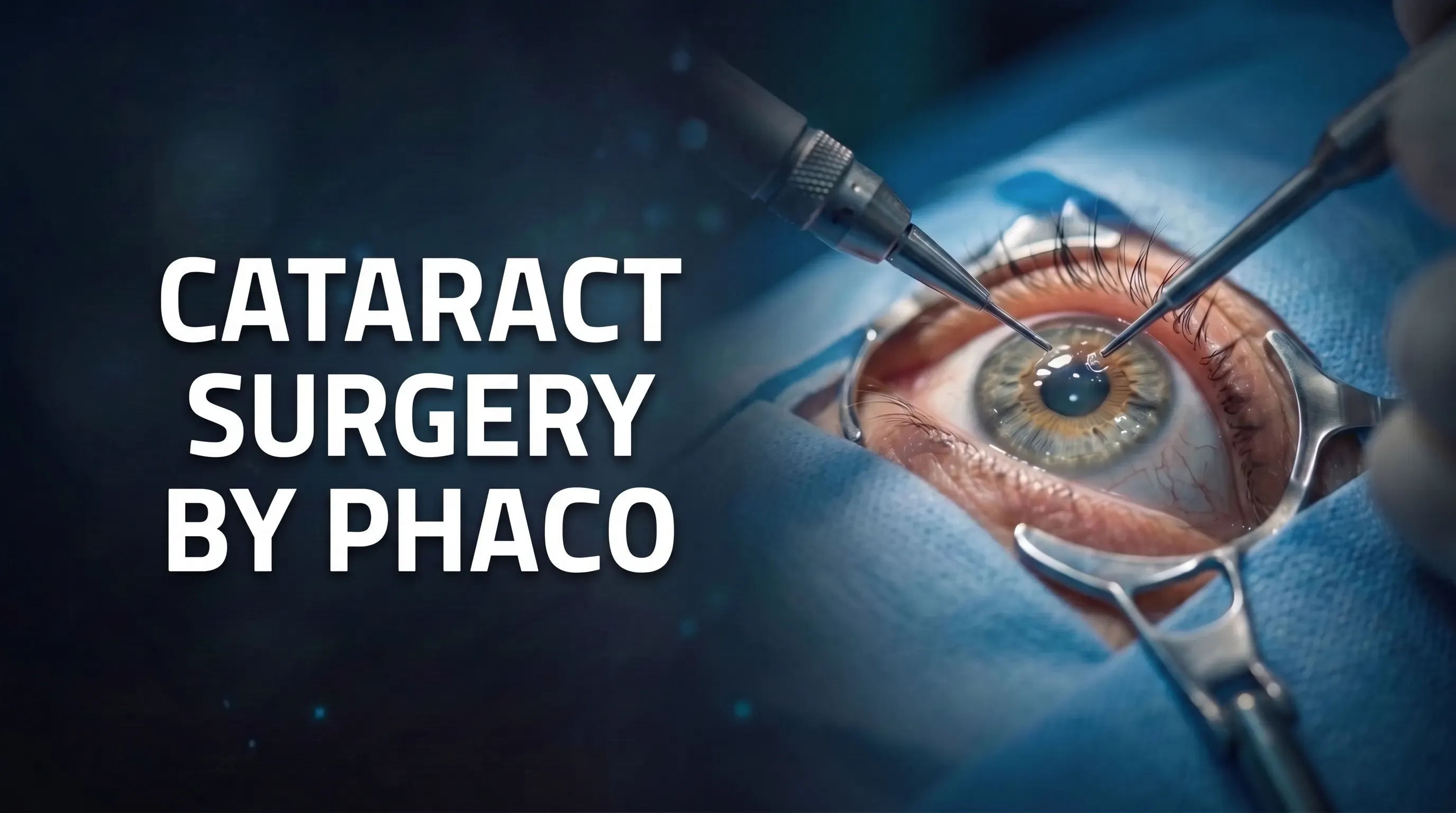
Cataracts may begin gradually as mild blurred vision or difficulty driving at night. Over time, they may progress and affect quality of life and the ability to perform daily activities normally.
With the major development in modern eye surgeries, cataract surgery with phaco has become one of the safest and most precise techniques for treating cataracts and restoring clear vision within a relatively short time.
In this article, we will discuss cataract surgery with phaco in detail, how phaco technology works to remove the cloudy lens, its most important advantages compared with traditional surgeries, and when it is the most suitable option for the patient.
We will also explain the steps of the procedure, starting from local anesthesia to implanting the new lens, the types of lenses that can be used during surgery, the recovery period, and what the patient should do after cataract surgery to ensure stable vision and faster recovery.
In addition, we will cover the most important possible complications, signs of cataract surgery failure, the factors that affect the cost of the procedure, and the role of surgical experience and modern technologies in improving the results of cataract surgeries and lens implantation.
If you are considering cataract surgery or want to learn about the latest techniques used to treat it, continue reading to learn everything you need to know before making your treatment decision.
Cataract Surgery with Phaco
Cataract surgery with phaco is one of the most commonly used modern techniques for treating cataracts and removing cloudiness from the eye lens with accuracy and safety.
The procedure depends on using ultrasound waves to break up the cloudy lens and remove it through a very small incision, without the need for a large traditional surgical opening.
This technique has greatly improved surgical results and noticeably reduced recovery time compared with older methods.
Cataract surgery with phaco helps improve vision quality in patients who suffer from poor vision caused by cataracts, especially when the natural lens of the eye gradually loses its transparency due to aging or certain chronic diseases such as diabetes.
The procedure also allows the implantation of modern intraocular lenses inside the eye to improve vision and reduce dependence on glasses in some cases. This has made phaco technology one of the main treatment options for cataracts in modern eye centers.
What Is Phacoemulsification for Cataract Removal?
Phacoemulsification depends on using a device that emits precise ultrasound waves to break up the cloudy lens inside the eye and turn it into small fragments that can be easily suctioned and removed through a very small surgical incision.
After that, a clear artificial lens is implanted to improve vision.
This technique is considered one of the most advanced methods for performing cataract surgery with phaco because it helps:
-
Reduce the size of the surgical incision.
-
Speed up the recovery period after surgery.
-
Reduce the possibility of certain complications.
-
Improve the stability of the implanted lens inside the eye.
-
Reduce the need for surgical stitches in many cases.
Using phaco technology allows the procedure to be performed with high precision while reducing the effect of surgery on the surrounding eye tissues. This helps patients return to their normal lives faster compared with older traditional surgeries.
Before surgery, many patients search for information about what the patient should do after cataract surgery to ensure stable vision and faster recovery. Therefore, the doctor carefully explains the post-operative instructions before performing the procedure.
Advantages of Cataract Surgery with Phaco
Modern developments in eye surgeries have made cataract surgery with phaco one of the safest and most common procedures for treating cataracts, due to the many advantages this technique provides compared with traditional surgeries.
The most important advantages include:
-
Very small surgical incision:
This helps the eye heal faster and reduces the need for surgical stitches. -
Faster recovery period:
Many patients can return to daily activities within a relatively short time after the procedure. -
Improved vision quality:
Modern lenses implanted during surgery help improve vision clearly. -
Reduced risk of complications:
This is due to the accuracy of the devices used and the reduced surgical intervention inside the eye. -
Procedure performed under local anesthesia:
This reduces the risks associated with general anesthesia in most cases. -
Ability to implant different types of lenses:
These may include monofocal or multifocal lenses, depending on the patient’s condition and visual needs.
Regular follow-up after surgery and adherence to medical instructions also help reduce the possibility of signs of cataract surgery failure and improve long-term vision stability.
When Is Cataract Surgery with Phaco the Best Option for the Patient?
Cataract surgery with phaco is usually the best option when cataracts begin to affect the patient’s vision quality and daily life, such as difficulty reading, driving, or seeing details clearly, especially if eyeglasses no longer improve vision adequately.
The ophthalmologist evaluates the condition of the lens and the degree of visual impairment before determining the need for surgery. The timing of intervention depends on how much cataracts affect daily activities, not only on the degree of lens opacity.
Cataract surgery with phaco may be suitable in cases such as:
-
Poor vision caused by lens opacity.
-
Difficulty driving, especially at night, due to glare and halos.
-
Blurred vision despite changing eyeglasses.
-
Daily activities or work being affected by poor vision.
-
The need to improve vision before certain retinal or corneal surgeries.
The procedure can significantly improve vision quality in many cases, especially when modern lenses suitable for each patient’s visual condition and daily needs are used.
Steps of Cataract Surgery with Phaco in Detail
Cataract surgery with phaco is performed through precise steps that aim to remove the cloudy lens and replace it with a clear artificial lens to improve vision quality.
Modern phaco technology allows the procedure to be performed through a very small incision, reducing recovery time compared with traditional surgeries.
The procedure is usually performed on the same day without the need for a long hospital stay. It is also commonly performed under local anesthesia, with careful monitoring of the patient during surgery.
The steps of cataract surgery with phaco include:
Local Anesthesia and Eye Preparation
At the beginning of cataract surgery with phaco, special eye drops are used to dilate the pupil. Then, local anesthesia is applied to reduce pain during the procedure.
In most cases, the patient remains awake during surgery but does not feel pain. Mild sedative medication may also be given to help the patient relax.
After that, the surgeon carefully sterilizes the eye and prepares the surgical tools. A very small incision is then made in the cornea to allow the phaco device and surgical instruments to enter the eye.
The small size of this incision helps the eye heal faster after surgery and reduces the need for surgical stitches.
Breaking Up the Cloudy Lens with Ultrasound Waves
After preparing the eye, the surgeon uses the phaco device, which works with ultrasound waves, to break up the cloudy lens inside the eye into very small fragments.
These fragments are then gently suctioned out of the eye using a dedicated suction device.
This stage is one of the most important steps in cataract surgery with phaco because it allows precise cataract removal while preserving the surrounding tissues inside the eye and reducing the impact of surgery on the cornea and other eye structures.
Modern phaco technology also helps reduce inflammation and speeds up recovery compared with traditional surgical methods that relied on larger incisions inside the eye.
Implanting the New Foldable Lens
After the cloudy lens is completely removed, a clear foldable artificial lens is implanted inside the eye to replace the natural lens.
The lens is inserted through the same small incision used during surgery. It then unfolds inside the eye and settles in its natural position.
There are several types of lenses that can be selected according to the patient’s condition and visual needs, such as monofocal lenses, multifocal lenses, or toric lenses designed for astigmatism.
Choosing the appropriate lens helps improve vision quality and may reduce dependence on glasses in some cases.
At the end of the procedure, the surgeon ensures that the new lens is stable and that there is no leakage from the surgical incision. A protective shield is then placed over the eye to protect it during the first hours after surgery.
The doctor also explains the recovery and follow-up instructions after the procedure.
Duration of Cataract Surgery with Phaco and Expected Recovery Period
Cataract surgery with phaco is considered a relatively quick procedure. The surgery usually takes between 10 and 20 minutes, depending on the degree of cataract, the condition of the eye, and the techniques used during surgery.
In most cases, the patient can return home on the same day without needing to stay in the hospital.
The recovery period after surgery varies from one person to another. However, many patients notice gradual improvement in vision during the first few days after the procedure, while vision may need several weeks to fully stabilize.
During the recovery period, the patient must use prescribed eye drops and attend regular follow-up visits with the doctor to reduce inflammation and ensure the stability of the implanted lens inside the eye.
The patient is also advised to avoid eye strain and exposure to dust or contaminated water during the first few days after surgery.
The precision of the surgery and adherence to medical instructions after cataract surgery with phaco help speed up recovery and improve long-term vision stability.
What Should the Patient Do After Cataract Surgery with Phaco to Ensure Stable Vision?
Many people want to know what the patient should do after cataract surgery to ensure the success of the procedure and stable vision after surgery.
The recovery period is an important part of treatment success and final result improvement.
The most important instructions after surgery include:
-
Use eye drops and medications at the scheduled times.
-
Avoid rubbing or pressing on the eye.
-
Wear an eye shield while sleeping if recommended by the doctor.
-
Avoid lifting heavy objects or intense physical effort during the first period.
-
Protect the eye from dust, smoke, and unclean water.
-
Sleep on the back or on the side opposite the operated eye.
-
Monitor any unusual symptoms and visit the doctor immediately if they appear.
-
Delay driving until vision improves.
-
Attend regular follow-up appointments with the doctor.
It is also preferable to avoid swimming or using cosmetics around the eye during the first period after surgery. This helps reduce the risk of infection and supports proper eye healing.
Regular follow-up after cataract surgery with phaco helps detect any problem early and manage it quickly to preserve vision stability and quality.
Are There Risks of Cataract Surgery with Phaco?
Cataract surgery with phaco is considered a safe procedure with a high success rate in most cases, especially with the major development in phaco devices and modern intraocular lens implantation techniques.
However, like any surgical procedure, there may be some possible complications or risks that vary from one case to another.
Possible complications after surgery may include:
-
Inflammation inside the eye.
-
Temporary increase in eye pressure.
-
Swelling of the cornea or retina.
-
Displacement of the implanted lens in rare cases.
-
Temporary blurred vision during the recovery period.
In some cases, certain signs of cataract surgery failure may appear, such as sudden vision weakness, severe pain, or persistent redness. In these cases, the patient should visit the doctor immediately to evaluate the condition and manage the problem early.
However, following medical instructions, choosing a specialized surgeon, and using modern techniques greatly help reduce the possibility of complications and improve long-term surgical outcomes.
Signs of Cataract Surgery Failure
Although cataract surgery with phaco is considered safe and has a high success rate, some cases may develop problems or complications that require quick medical evaluation.
For this reason, many patients want to know the signs of cataract surgery failure after the procedure.
The most important signs that require immediate medical attention include:
-
Sudden weakness or continuous deterioration of vision after surgery.
-
Severe eye pain that does not improve with medication.
-
Severe and persistent eye redness.
-
Appearance of light flashes or a sudden increase in black floaters.
-
Noticeable swelling or abnormal eye discharge.
-
Severe sensitivity to light with blurred vision.
In some cases, complications such as infection, increased eye pressure, or displacement of the implanted lens may occur. However, early detection and regular follow-up greatly help treat the problem and reduce its impact on vision.
Adhering to the doctor’s instructions after cataract surgery with phaco also plays an important role in reducing the possibility of signs of cataract surgery failure and preserving vision stability after surgery.
Cost of Cataract Surgery with Phaco in Egypt
The cost of phaco cataract surgery in Egypt starts from EGP 19,500 per eye, including phaco surgery with a foldable intraocular lens. The cost may vary depending on the type of lens used and the patient’s visual needs. Some advanced lenses, such as trifocal or EDOF lenses, may cost up to EGP 66,000 per eye.
The final cost of the procedure varies according to several factors, including the surgeon’s experience, the techniques used during surgery, the type of implanted lens, as well as the medical center’s level of equipment, examinations, and post-operative follow-up. Therefore, a fixed price cannot be determined for all cases without a comprehensive eye evaluation and choosing the most suitable lens type and treatment plan for each patient.
Important note: All mentioned prices are estimated starting prices and may vary according to each patient’s condition. The final cost is only determined after consultation and medical examination.
To know the exact cost of cataract surgery suitable for your case, you can book an appointment with Dr. Fouad El-Sayyad - Consultant of Ophthalmology and Eye Surgery and holder of the American Board - to undergo the required examinations and determine the best technique and suitable lens to improve vision quality using the latest technologies available at Dr. Fouad’s Center.
Fouad El-Sayyad: Surgical Precision in Using Phaco Techniques and Lens Implantation
The success of cataract surgery with phaco depends greatly on the surgeon’s experience, diagnostic accuracy, and choosing the right technique and lens for each case.
For this reason, Dr. Fouad El-Sayyad, Consultant of Ophthalmology and Eye Surgery and holder of the American Board certification, is keen to provide an advanced level of medical care using the latest cataract surgery and lens implantation techniques at his center.
The most important advantages Dr. Fouad El-Sayyad provides in phaco surgeries and lens implantation include:
-
Specialized experience in modern cataract surgeries:
He has extensive experience in using modern phaco techniques to treat cataracts accurately while preserving eye tissues and reducing recovery time. -
Use of the latest examination and diagnostic devices:
The center relies on advanced devices to measure eye dimensions and accurately determine the most suitable lens type for each patient. -
Choosing the right lens according to each patient’s needs:
This includes monofocal lenses, multifocal lenses, or toric lenses for astigmatism to improve vision quality and reduce dependence on glasses. -
Attention to precise surgical details:
This starts from evaluating the cornea and retina and continues until ensuring the stability of the implanted lens inside the eye after surgery. -
Use of modern techniques that reduce complications:
The techniques used inside the center help reduce inflammation, speed up recovery, and improve vision stability after surgery. -
Accurate follow-up after cataract surgery with phaco:
Patients are followed up regularly after surgery to ensure vision stability and reduce the possibility of complications or signs of cataract surgery failure. -
Providing a customized treatment plan for each patient:
Since every case is different, the technique, lens type, and follow-up plan are selected according to the patient’s needs and eye condition. -
Following modern medical standards in eye surgeries:
The center focuses on applying the latest recommendations and globally used techniques in cataract surgeries and lens implantation. -
Focusing on patient comfort and vision quality after surgery:
This includes explaining the steps of the procedure, recovery instructions, and answering questions about what the patient should do after cataract surgery to ensure the best possible result.
For these reasons, many patients prefer choosing Dr. Fouad El-Sayyad when considering cataract surgery with phaco, in order to receive accurate diagnosis and advanced surgery using the latest lens implantation techniques to improve vision quality with the highest possible level of safety.
Conclusion
In conclusion, cataract surgery with phaco is one of the latest and most precise techniques used to treat cataracts and improve vision quality safely and effectively, especially with the major development in phaco devices and the modern types of lenses used during surgery.
The success of the procedure depends greatly on accurate diagnosis, the surgeon’s experience, choosing the right lens, and following medical instructions after surgery to reduce the possibility of complications or signs of cataract surgery failure.
If you suffer from blurred vision or have been diagnosed with cataracts, do not hesitate to book an appointment with Dr. Fouad El-Sayyad, Consultant of Ophthalmology and Eye Surgery and holder of the American Board certification, for a comprehensive eye examination and to determine the most suitable technique and lens for your condition using the latest cataract surgery with phaco technologies available at Dr. Fouad El-Sayyad Eye Center.
Frequently Asked Questions
What are the complications of cataract surgery with phaco?
Although cataract surgery with phaco is a safe and common procedure, some complications may occur in limited cases.
These may include:
-
Inflammation.
-
Temporary increase in eye pressure.
-
Swelling of the cornea or retina.
-
Blurred vision during the recovery period.
-
Displacement of the implanted lens in rare cases.
You should visit the doctor immediately if you experience severe pain, persistent redness, sudden vision weakness, abnormal discharge, or severe sensitivity to light. These symptoms may be signs of cataract surgery failure or complications that require quick intervention.
What is the difference between phaco and laser?
Cataract surgery with phaco depends on using ultrasound waves to break up the cloudy lens and suction it out of the eye, then implanting a clear artificial lens instead.
Laser may be used in some cases to assist in certain surgical steps, such as creating precise incisions or dividing the lens before removal. After that, lens removal is often completed using the phaco device.
In simple terms, phaco is the main technique for removing cataracts, while laser may be an assisting tool in some cases. The doctor determines the most suitable option according to the eye condition, lens type, and degree of cataract.
Book an Eye Consultation Appointment | Dr. Fouad El Sayyad
Book now