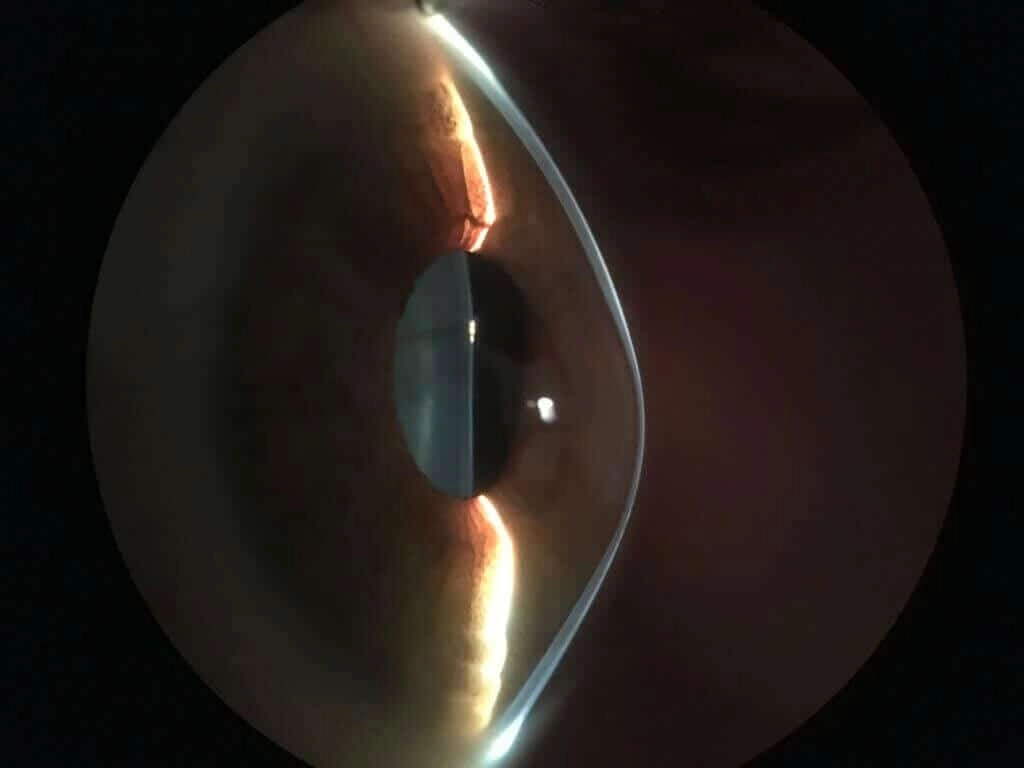
Recent studies estimate that keratoconus affects around 289.1 people per 100,000 worldwide, which means the condition is not as rare as previously believed. It may affect people across different age groups, especially young individuals.
This rate highlights the importance of early attention to keratoconus symptoms, especially when rapid changes in vision occur or when eyeglass prescriptions keep changing continuously.
In this article, we will learn about the symptoms of keratoconus and how to distinguish them from other eye problems, such as persistent blurred vision, light sensitivity, and headaches caused by eye strain. We will also discuss the most common questions you may have, such as: Does keratoconus cause blindness? Is keratoconus hereditary? In addition, we will cover the latest keratoconus treatment methods, such as corneal cross-linking and intracorneal ring implantation.
If you suspect that you may be experiencing symptoms of keratoconus or want to learn more about the available solutions, continue reading this article to discover everything you need to know to deal with this condition effectively.
For a broader overview, see Treatment of keratoconus: key details. For a related perspective, see Diagnosis of keratoconus.
What Is Keratoconus?
Keratoconus is a condition that affects the cornea of the eye and causes a gradual weakening of its tissue structure. This leads the cornea to gradually change from its normal round shape into an irregular cone-like shape. This change affects the way light enters the eye, causing vision to become progressively blurred over time. Keratoconus symptoms may start mildly at first, then worsen if the condition is not diagnosed and monitored properly.
Keratoconus symptoms usually appear during adolescence or the early twenties, and the condition may progress faster in some patients than in others. Therefore, early diagnosis helps reduce disease progression and allows the doctor to choose the most suitable treatment plan before the condition reaches advanced stages.
Many patients search for answers to questions such as: “Is keratoconus dangerous?” or “Does keratoconus cause blindness?” The truth is that the seriousness of the condition varies depending on the degree of the disease, how quickly it progresses, and how committed the patient is to treatment and follow-up. In most cases, early diagnosis and regular follow-up help preserve vision quality and reduce the chances of severe complications.
Some people also think that the problem is only related to poor eyesight, but keratoconus affects the regularity of the corneal surface itself. Therefore, in some stages, vision may not fully improve with traditional eyeglasses. This is why the patient needs an accurate evaluation by a specialist in corneal diseases, such as Dr. Fouad El Sayyad, consultant ophthalmologist certified by the American Board of Ophthalmology, to determine the degree of the condition and the most suitable follow-up or treatment options.
What Are the Main Symptoms of Keratoconus?
Keratoconus symptoms usually begin gradually, so the patient may not notice them at first or may think they are just ordinary vision weakness. Over time, vision begins to change more noticeably due to the irregular shape of the cornea. Symptoms may appear that affect the quality of daily vision, concentration, and night driving.
The severity of keratoconus symptoms varies from one person to another depending on the degree of the disease and how quickly it progresses. However, early diagnosis greatly helps reduce the progression of the condition and choose the appropriate treatment plan before reaching advanced stages. The most important symptoms of keratoconus include:
Noticeable Blurred and Cloudy Vision
Blurred vision is one of the most common symptoms of keratoconus. The patient may notice that vision has become unclear or cloudy gradually, even when using eyeglasses. This happens because the shape of the cornea changes and its surface becomes irregular, affecting how light is focused inside the eye.
In some cases, the patient may notice that vision differs from one eye to the other, or that images appear distorted or sometimes doubled, especially while reading or using a mobile phone for long periods. Therefore, persistent blurred vision over time requires a detailed corneal examination and should not be treated only by changing eyeglasses.
Frequent and Rapid Changes in Eyeglass Prescription
One of the common signs that may indicate keratoconus is the frequent need to change eyeglasses within short periods. This is one of the most noticeable symptoms of keratoconus, especially among teenagers and young adults in the early stages of the disease.
This change occurs as a result of increasing astigmatism and the gradual irregularity of the corneal surface. The patient may feel temporary improvement after changing eyeglasses, but blurred vision soon returns again. In some cases, eyeglasses may no longer provide enough improvement as the disease progresses. At this point, the patient needs a specialist evaluation to determine the most suitable keratoconus treatment options.
Severe Sensitivity to Light and Glare
Increased sensitivity to light is a common problem among patients with keratoconus. It appears as clear discomfort from strong lighting or difficulty tolerating sunlight and bright lamps. This problem is considered one of the symptoms of keratoconus that may affect daily comfort and vision quality.
The patient may also experience severe glare around lights at night or while driving, due to light scattering inside the eye caused by the irregular corneal surface. Therefore, if these symptoms appear alongside continuous changes in vision, the cornea should be examined using specialized devices to accurately assess the condition.
Difficulty Seeing at Night and Light Scattering “Halos”
Difficulty seeing at night is one of the most prominent symptoms of keratoconus. The patient may notice halos or clear light scattering around lights, especially while driving at night or in dimly lit places.
This happens because the irregular cornea cannot focus light naturally inside the eye, causing light to appear scattered or sometimes doubled. This problem may gradually worsen if the condition is not diagnosed and monitored properly.
Some patients also ask: Does keratoconus cause blindness? In most cases, it does not cause complete loss of vision. However, neglecting treatment and follow-up may lead to severe deterioration in vision quality over time, especially in advanced cases.
Persistent Headaches and Eye Strain
Some patients may suffer from repeated headaches or constant eye strain as the eye tries to focus despite blurred vision and corneal irregularity. For this reason, headaches may sometimes be considered one of the symptoms associated with keratoconus and poor vision quality.
Eye strain often increases during reading or long periods of screen use. The patient may also find it difficult to concentrate or may feel temporary relief after closing the eyes or reducing light exposure. This is why many patients ask an important question: Does keratoconus cause headaches? The answer is that headaches may occur as a result of continuous visual strain linked to blurred vision and irregular astigmatism.
It is also important to note that persistent headaches with poor vision or repeated changes in eyeglass prescription require an accurate corneal examination, especially if there is a family history of the condition or other symptoms related to keratoconus.
Are Early Keratoconus Symptoms Different from Advanced-Stage Symptoms?
Yes, keratoconus symptoms differ clearly between the early and advanced stages because the shape of the cornea changes gradually as the disease progresses. In the beginning, symptoms may be mild and unclear, so some patients may think the problem is just ordinary poor eyesight or simple astigmatism. However, symptoms gradually increase as the cornea becomes more curved and its surface becomes more irregular.
In the early stages, keratoconus symptoms may include:
- Mild and intermittent blurred vision.
- Frequent need to change eyeglasses.
- Gradual increase in astigmatism.
- Eye strain after reading or using screens.
- Mild sensitivity to light.
At this stage, early diagnosis may help reduce the progression of the condition through suitable keratoconus treatment options, such as corneal cross-linking or careful follow-up depending on the degree of the condition.
In advanced stages, vision may become more blurred, with clear halos around lights, difficulty driving at night, and insufficient improvement even with eyeglasses. In some cases, corneal opacities or scars may occur, affecting vision quality more significantly. This is why some patients ask: “Is keratoconus dangerous?” The truth is that neglecting follow-up and treatment may allow the condition to progress further, while early diagnosis and regular follow-up help reduce complications in many cases.
Is Continuous Eye Rubbing a Symptom or a Cause of Keratoconus?
Continuous eye rubbing is strongly associated with keratoconus. Studies indicate that it may be one of the causes of keratoconus or a factor that accelerates the progression of the condition in some patients, especially when chronic allergies or repeated eye itching are present.
Some patients rub their eyes frequently because of itching or allergies. However, continuous pressure on the cornea may weaken its tissues over time, contributing to a gradual change in its shape. Therefore, doctors always advise avoiding eye rubbing as much as possible, especially for people who have a family history of the disease or who show early symptoms of keratoconus.
When discussing the causes of this condition, many patients ask: “Is keratoconus hereditary?” Research suggests that genetic factors exist in a percentage of patients. However, the disease often occurs as a result of several overlapping factors, such as genetics, chronic eye rubbing, severe allergies, and some connective tissue disorders.
Therefore, reducing eye rubbing, treating allergies, and seeking early follow-up may help reduce the progression of the condition, especially in children and teenagers who are at risk of developing keratoconus.
What Are the Causes and Risk Factors of Keratoconus?
So far, there is no single confirmed cause of keratoconus. However, studies indicate that several factors may increase the likelihood of developing the condition or accelerate its progression. This is why many patients search for the causes of keratoconus to understand the nature of the disease and whether its progression can be prevented.
The most important risk factors associated with keratoconus include:
- Genetic factors and a family history of the disease.
- Frequent and aggressive eye rubbing.
- Chronic eye allergies.
- Some hereditary diseases or connective tissue disorders.
- Developing keratoconus at a young age.
- Naturally weak corneal tissues in some individuals.
Having these factors does not necessarily mean that a person will develop the disease, but it increases the importance of early examination and regular follow-up, especially when any symptoms of keratoconus appear. Understanding the causes of keratoconus and paying attention to the associated factors helps detect the disease early and choose an appropriate treatment options before the condition progresses further.
When Should You Visit a Doctor After Keratoconus Symptoms Appear?
When any symptoms of keratoconus appear, it is important to visit a cornea specialist in Cairo for an accurate evaluation. Although some symptoms may begin mildly or go unnoticed, early detection can help stop the progression of the disease and preserve vision. If you suffer from any of the following symptoms, you should visit a doctor immediately:
- Persistent blurred vision even after changing eyeglasses.
- Frequent changes in eyeglass prescription within short periods.
- Severe sensitivity to light and halos around lights.
- Difficulty seeing at night or in dark places.
- Persistent headaches or eye strain while reading or using screens.
Early detection is an important part of managing the disease because early treatments, such as keratoconus treatment through corneal cross-linking or intracorneal ring implantation, may help slow down or even stop the progression of the condition.
If you have risk factors such as heredity, chronic eye allergies, or continuous eye rubbing, you should be more careful and consult a cornea specialist such as Dr. Fouad El Sayyad, consultant ophthalmologist certified by the American Board of Ophthalmology, as soon as you notice any symptoms.
How Is Keratoconus Accurately Diagnosed?
Keratoconus is diagnosed through a set of precise examinations that help the doctor determine the shape of the cornea, the degree of steepening, and corneal thickness. The most important diagnostic methods include:
- Corneal Topography: This technique provides a detailed map of the corneal surface and helps identify damaged or distorted areas.
- Pachymetry: This test helps measure corneal thickness in different areas to assess its stability.
- Slit-Lamp Examination: This is used to examine the shape of the cornea and review the surrounding tissues.
- Keratometry: This measures the degree of corneal curvature and determines how steep the cornea is.
Diagnosis should be performed by a cornea specialist in Cairo who is experienced in using these technologies to identify the exact cause of the symptoms and determine the most suitable treatment for each case.
Through these examinations, the doctor can determine whether the patient has keratoconus and can also assess the stage of the disease and the available treatment options.
What Are the Complications of Neglecting Keratoconus Treatment?
Neglecting keratoconus treatment may lead to serious complications that significantly affect vision and quality of life. These complications may include:
- Severe vision deterioration: If keratoconus is left untreated, it may cause a noticeable loss of vision due to changes in the corneal shape.
- Corneal scarring: This may require advanced surgery, such as corneal transplantation.
- Severe sensitivity to light: This may make it difficult to tolerate sunlight or strong lighting.
- Increased astigmatism: Astigmatism may become impossible to correct with eyeglasses or medical lenses.
- Loss of ability to perform daily activities: Activities such as driving or reading may become difficult because of worsening vision.
Therefore, it is important not to ignore keratoconus symptoms and to consult an experienced corneal surgery consultant such as Dr. Fouad El Sayyad, consultant ophthalmologist certified by the American Board of Ophthalmology, as soon as symptoms appear, in order to receive proper diagnosis and treatment at the right time.
The disease should be treated from its early stages to avoid these complications. Early keratoconus treatment using techniques such as corneal cross-linking or intracorneal ring implantation helps reduce disease-related damage and significantly improves vision quality.
What Are the Latest Keratoconus Treatment Methods?
The latest keratoconus treatment methods are among the most common questions asked by patients diagnosed with this disease, especially because keratoconus can significantly affect vision. With the development of ophthalmology and advanced technologies, many treatment options are now available to help improve vision quality or even stop disease progression in its early stages.
Corneal Cross-Linking
Corneal cross-linking is one of the latest and most important treatments aimed at strengthening the cornea and preventing the progression of the disease. This procedure is performed using ultraviolet light and special eye drops, which increase the bonds between collagen fibers in the cornea and make it stronger and more stable. This method helps stop the progression of keratoconus in its early and moderate stages and is considered an effective treatment option in these cases.
This method is relatively non-surgical and is performed in specialized clinics, making it a safe option for many patients who do not want to undergo complex surgical procedures at the beginning.
Intracorneal Ring Implantation
Intracorneal ring implantation is a procedure used to treat keratoconus in cases that cannot be controlled with eyeglasses or contact lenses. Rings are implanted inside the cornea to improve its shape and reduce the steepening caused by the disease. This procedure helps correct astigmatism resulting from the change in corneal shape and improves vision.
The rings are placed inside the cornea under numbing drops, so most patients feel pressure rather than pain. The procedure is performed in specialized clinics, and the patient can return to daily life within a short time after surgery. This method is effective in many keratoconus cases and is considered an important option before considering full corneal transplantation.
Corneal Transplantation “Lamellar or Full-Thickness” for Advanced Cases
In advanced cases of keratoconus, previous procedures such as corneal cross-linking or ring implantation may not be enough to significantly improve vision. In these cases, the patient may need lamellar or full-thickness corneal transplantation, where the damaged cornea is replaced with a donor cornea. Corneal transplantation is divided into:
- Deep Anterior Lamellar Keratoplasty “DALK”: Used in cases where the front layer of the cornea is affected while the inner layers remain healthy.
- Full-Thickness Corneal Transplantation: Used in cases where all layers of the cornea are affected, including the inner layers.
Corneal transplantation is considered a possible treatment option in advanced cases where the disease causes severe vision deterioration. This surgery requires continuous follow-up and postoperative care to monitor graft stability and detect signs of rejection.
Can a Patient with Keratoconus Live a Normal Life?
Many keratoconus patients wonder whether they can live a normal life after being diagnosed with the condition. The truth is that most patients can live normally if the disease is diagnosed in its early stages and treated appropriately. With modern keratoconus treatment options, such as corneal cross-linking, ring implantation, or special contact lenses, most patients can regain clearer vision and improve their daily quality of life.
With medical advancement, surgery such as corneal transplantation has also become a good option for patients with advanced keratoconus, allowing them to return to their daily activities after adapting to the transplanted cornea.
In addition, patients who receive accurate treatment and strictly follow medical instructions can perform daily activities such as reading, driving, or using electronic devices without major problems. Therefore, although keratoconus may affect vision, proper medical care and continuous follow-up can help patients return to a normal life.
Why Choose Dr. Fouad El Sayyad for Keratoconus Diagnosis and Treatment in Egypt?
Dr. Fouad El Sayyad specializes in corneal surgery and the treatment of keratoconus. As a Consultant Ophthalmologist and Eye Surgeon who is American Board Certified, he provides patients with accurate diagnosis and a well-planned treatment plan using the latest international technologies.
Dr. Fouad El Sayyad does not rely only on traditional diagnosis. He uses advanced devices such as corneal mapping systems, corneal thickness measurement devices, and astigmatism examination technologies to accurately determine the degree of the disease before choosing the appropriate treatment. These tools help provide a comprehensive evaluation of the corneal condition and support timely treatment decisions to prevent vision deterioration.
As a corneal surgery consultant, Dr. Fouad El Sayyad also pays great attention to keeping up with the latest medical and treatment developments while following international standards in corneal surgeries. This is reflected in the advanced solutions he offers, such as corneal cross-linking, ring implantation, and lamellar or full-thickness corneal transplantation techniques in advanced cases.
Most importantly, he focuses on providing personalized patient care with a clear explanation of all available treatment options, ensuring that the patient fully understands their condition and needs. This makes Dr. Fouad El Sayyad
Conclusion
In conclusion, early diagnosis and timely treatment are essential foundations for preserving eye health and limiting the progression of keratoconus symptoms. The earlier the condition is detected, the greater the chances of controlling it and improving vision quality by choosing the most suitable treatment, whether through corneal cross-linking or corneal transplantation in advanced stages.
If you notice any changes in your vision or unusual symptoms, do not hesitate to take the first step toward treatment. Book your appointment with Dr. Fouad El Sayyad, consultant ophthalmologist certified by the American Board of Ophthalmology, to receive an accurate diagnosis and a complete treatment plan using the latest technologies, to support recovery, assess visual outcomes, and protect your eye health.