
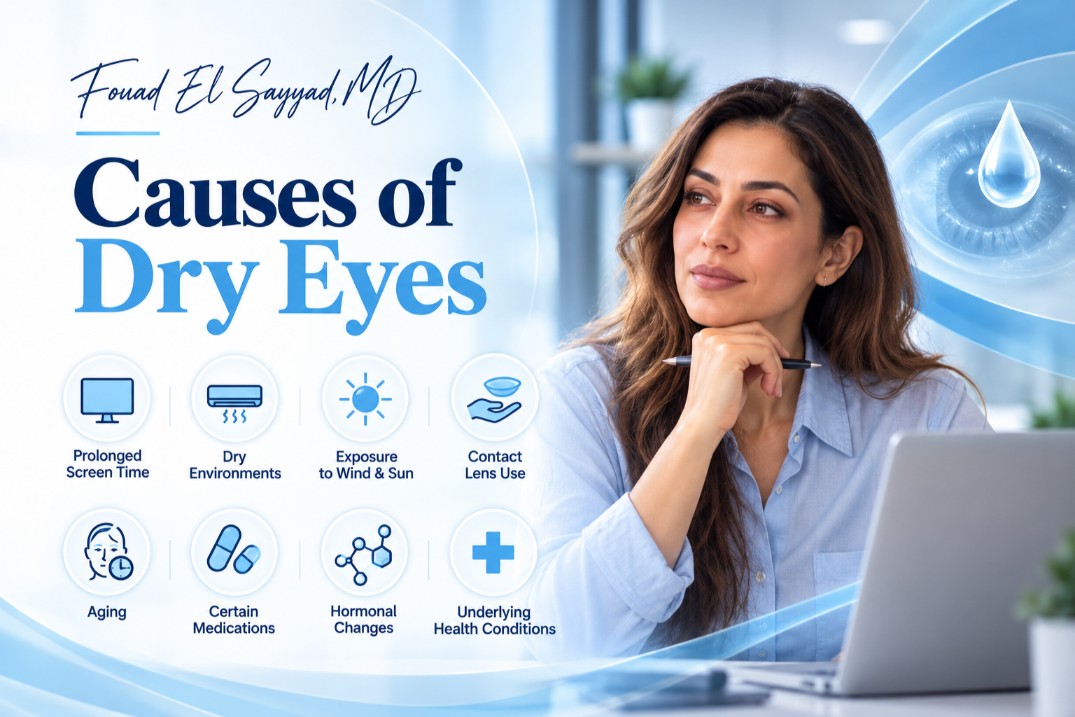
Dry eye may seem like a simple issue at first, but it can turn into a constant source of discomfort and blurry vision if not properly addressed. The causes of dry eye vary among lifestyle-related factors, eye diseases, and certain health or autoimmune conditions that affect tear production and stability on the ocular surface.
In this article, we will explore in detail the medical and environmental causes of dry eye, the relationship between dry eye and certain eye conditions such as Meibomian Gland Dysfunction (MGD) and chronic eyelid inflammation, the temporary effect of vision correction surgeries (LASIK) on dry eye, as well as the role of autoimmune diseases in worsening the condition. We will also address the common question "Does dry eye cause blindness?", explain the relationship between dry eye symptoms and headaches, discuss cases cured of dry eye, and highlight when the condition becomes serious requiring specialized medical intervention. If you suffer from burning sensations, blurry vision, or persistent eye strain, keep reading to learn about the causes and appropriate Treatment for dry eyes to preserve your eye health and vision quality with Dr. Fouad El Sayyad – Consultant Ophthalmologist and Ophthalmic Surgeon, certified by the American Board.
For a complete overview of the condition, see our guide to dry eye syndrome.
Causes of Dry Eye
The causes of dry eye range from simple lifestyle factors to medical causes requiring specialized diagnosis and treatment. Dry eye occurs when the eye does not produce enough tears or when tears evaporate too quickly. Tears are essential for keeping the surface of the eye lubricated and protecting it from inflammation and visual blurriness.
Dry eye symptoms may appear as burning, a foreign body sensation in the eye, or temporary blurry vision. In some cases, headaches may occur, which explains the link between dry eye symptoms and headaches resulting from continuous eye strain and affected vision quality.
Causes of dry eye vary from person to person depending on age, health condition, environmental factors, and daily visual demands. Therefore, an accurate diagnosis helps determine the primary cause and structure a suitable treatment plan for each case.
Medical and Physiological Causes of Reduced Tear Secretion
Several medical factors can lead to decreased tear production and consequently worsen dry eye causes, particularly with aging or the presence of chronic diseases affecting the tear glands. Key medical causes associated with dry eye include:
- Aging: Tear production naturally decreases with age, especially after the age of 50.
- Hormonal Changes: Hormonal fluctuations can impact the quality and quantity of tears, particularly in women.
- Certain Medications: Such as allergy medications, antidepressants, and certain blood pressure medications that may reduce tear secretion.
- Vitamin Deficiencies: Such as Vitamin A deficiency, which affects ocular surface health and tear production.
- Lacrimal Gland Disorders: Which can impair the natural production of the aqueous layer of tears.
These issues can lead to persistent symptoms such as burning, blurry vision, and eye fatigue. Early diagnosis helps slow symptom progression, enhance eye comfort, and improve vision quality.
Environmental Factors and Lifestyle Causes of Dry Eye
Causes of dry eye are not limited to diseases alone; environmental and lifestyle factors play a significant role in accelerating tear evaporation and recurring symptoms, especially with prolonged use of electronic devices and long hours spent in dry or air-conditioned environments. Notable factors include:
- Prolonged screen time and smartphone usage.
- Continuous exposure to air conditioning or dry air.
- Smoking or exposure to second-hand smoke.
- Decreased blink rate during reading or device use.
- Extended contact lens wear.
- Frequent exposure to dust or wind.
Many patients look for cases cured of dry eye. The truth is that many cases significantly improve once the underlying cause is addressed and proper steps are taken to minimize factors that increase tear evaporation and eye strain.
Eye Diseases and Health Conditions Associated with Dry Eye
Dry eye causes may be tied to underlying eye diseases or chronic health conditions that compromise tear quality or tear film stability on the surface of the eye. In such cases, treatment goes beyond using artificial tears alone; it relies on accurately diagnosing and treating the root cause. For instance, managing complex corneal conditions like keratoconus may require specialized options such as Rigid Lenses For Keratoconus, which necessitate careful monitoring for ocular surface hydration.
Untreated, long-standing dry eye can lead to increased ocular surface irritation, eyelid inflammation, and frequent blurred vision. Early diagnosis helps prevent complications, improve eye comfort, and enhance vision quality.
Meibomian Gland Dysfunction (MGD) and Chronic Blepharitis
Meibomian Gland Dysfunction (MGD) is one of the most common causes of dry eye. These glands produce the lipid (oily) layer of tears that prevents rapid tear evaporation. When these glands malfunction, tear film quality degrades, intensifying dryness and irritation symptoms. Symptoms associated with MGD include:
- Burning or stinging sensation in the eye.
- Temporary blurry vision, particularly during screen use.
- Sticky eyelids or excessive discharge around the eyelashes.
- Eye redness and recurrent eyelid inflammation.
- Eye fatigue while reading or driving.
Chronic eyelid inflammation can increase tear evaporation and trigger dry eye symptoms alongside headaches due to constant strain and unstable vision. Treatment focuses on regular eyelid hygiene, improving oil gland secretion, and utilizing modern therapeutic techniques depending on severity and underlying cause.
The Temporary Impact of Vision Correction Surgeries (LASIK) on Dry Eye
Dry eye may occur temporarily following vision correction procedures such as LASIK or Femto-LASIK. Understanding the Recovery Time After LASIK helps set appropriate expectations for how long post-operative dryness and corneal healing may last. It occurs because microscopic corneal nerves are affected during surgery, temporarily impacting tear secretion and tear film stability.
Furthermore, many individuals explore The Difference Between Femto-LASIK And SMILE Pro prior to surgery to select the technique with the least impact on post-procedure tear film stability.
Symptoms that may appear after vision correction surgeries include:
- Dryness or burning sensation inside the eye.
- Light sensitivity (photophobia).
- Temporary blurred vision, especially at the end of the day.
- Eye strain during reading or screen time.
In most cases, symptoms gradually resolve with the use of lubricating drops and adherence to post-op instructions. However, patients who suffered from pre-existing dry eye prior to surgery may require longer follow-up and extended treatment.
Evaluating the ocular surface before vision correction surgery helps minimize post-operative dry eye causes, helping assess dryness risk and plan care during recovery.
Autoimmune Diseases
Dry eye causes can be linked to autoimmune conditions that affect the lacrimal glands, diminishing their capacity to produce tears naturally. In these instances, dry eye is part of a broader health issue requiring precise diagnosis and collaborative management between an ophthalmologist and relevant specialists. Common autoimmune conditions associated with dry eye include:
- Sjögren’s Syndrome: One of the most prominent conditions associated with severe dry eye and dry mouth due to the immune system targeting tear and salivary glands.
- Rheumatoid Arthritis: Can affect the lacrimal glands and cause chronic ocular surface inflammation.
- Lupus (Systemic Lupus Erythematosus): Can cause various ocular complications, including dry eye.
- Autoimmune Thyroid Disorders: Can affect the ocular surface and tear film stability.
These conditions often result in persistent symptoms such as burning, blurred vision, light sensitivity, and chronic headaches secondary to ocular irritation. Therefore, treating autoimmune-related dry eye requires managing the underlying disease alongside regular follow-ups to preserve ocular surface health and prevent complications.
Does Dry Eye Cause Blindness?
Many patients ask: Does dry eye cause blindness? In the vast majority of cases, mild to moderate dry eye does not lead to vision loss. However, it can cause persistent blurriness and discomfort if left unmanaged. In severe and chronic cases, especially when treatment is neglected over long periods, dry eye can lead to complications affecting the cornea—such as inflammation, abrasions, or corneal ulcers—which can significantly impair vision quality if not treated early.
Signs requiring immediate ophthalmologist evaluation include:
- Continuous blurry vision that does not improve with drops.
- Severe pain or intense sensitivity to light.
- Persistent redness or recurrent infections.
- A constant foreign body sensation in the eye.
- Noticeable deterioration in vision over time.
Early diagnosis and treating the root causes of dry eye are essential for protecting the corneal surface and reducing the risk of complications that could affect future vision.
The Relationship Between Dry Eye Symptoms and Headaches
Some patients may not realize the connection between dry eye symptoms and headaches. In reality, dry eye can lead to continuous visual fatigue due to tear film instability and fluctuating vision. This can cause headaches or tension around the eyes, especially after reading or spending extended periods in front of screens.
Common dry eye symptoms that contribute to headaches include:
- Recurrent blurred vision.
- Eye strain during prolonged focus.
- Sensitivity to lighting.
- Burning and ocular discomfort.
- Difficulty using screens for extended periods.
Reduced blinking while working on computers or phones accelerates tear evaporation, worsening dry eye symptoms and headaches toward the end of the day. Treating dry eye and stabilizing the tear film helps relieve eye strain, improve visual comfort, and reduce screen-related headaches.
Cases Cured of Dry Eye
Many patients seek out cases cured of dry eye for reassurance that symptoms can improve and normal daily life can be resumed. Indeed, a large percentage of dry eye cases show significant improvement once the underlying cause is accurately diagnosed and treated with an appropriate therapeutic regimen and healthy lifestyle habits.
Recovery varies depending on the severity and root cause. Some patients experience relief with lubricating drops and managed screen time, while others require targeted treatment for eyelid inflammation, Meibomian gland dysfunction, or associated autoimmune disorders. Factors contributing to dry eye improvement include:
- Addressing the root cause of dryness.
- Adhering to prescribed eye drops and treatments.
- Reducing exposure to screens and dry air.
- Treating eyelid inflammation and oil gland dysfunction.
- Regular follow-ups with an ophthalmologist.
- Adopting eye-healthy daily habits.
Successful recovery from dry eye relies not just on artificial tears, but on precise diagnosis, continuous care, and modifying lifestyle triggers that aggravate ocular irritation.
When Are Causes of Dry Eye Serious and Require Intervention by Dr. Fouad El Sayyad?
While some causes of dry eye are mild and temporary, other cases indicate underlying health conditions requiring specialized evaluation and early intervention to protect the cornea and visual clarity. Symptoms that warrant a prompt visit to an ophthalmologist include:
- Persistent dryness despite regular use of lubricating drops.
- Continuous blurring or declining vision.
- Severe pain or strong sensitivity to light.
- Recurrent redness or inflammation.
- Difficulty reading or using screens due to severe eye strain.
- A persistent foreign body sensation.
- Recurring dry eye symptoms that interfere with daily life.
Some cases are tied to autoimmune diseases or chronic inflammation that necessitate specialized medical therapies beyond standard artificial tears, or evaluating other concurrent conditions like cataract-related visual changes where non-surgical monitoring or Treating Cataracts Without Surgery might be discussed. Early diagnosis protects the surface of the eye and minimizes corneal risks. Dr. Fouad El Sayyad – Consultant Ophthalmologist and Ophthalmic Surgeon certified by the American Board – provides comprehensive evaluations of the ocular surface and tear glands to identify the root cause and tailor a treatment plan suited to each patient's degree of dryness.
Sayyad Eye Center Branches in Mohandessin & 5th Settlement and Appointment Booking
Sayyad Eye Center offers diagnostic and therapeutic eye care services using state-of-the-art diagnostic equipment and advanced medical techniques, focusing on thorough dry eye evaluations to determine the most effective treatment for each patient. The center welcomes patients at its locations:
- Mohandessin Branch: 3A League of Arab States St., Sphinx Square – providing diagnostic services for corneal diseases, dry eye management, and various ophthalmic surgeries.
- 5th Settlement Branch: Medical Complex 2, opposite the New Cairo Court – equipped with advanced diagnostic technologies to evaluate dry eye, ocular surface conditions, and lacrimal gland health.
You can book an evaluation or inquire about dry eye treatment options by contacting Sayyad Eye Center to schedule an examination and receive a personalized treatment plan for your eyes.
In conclusion, the causes of dry eye differ from person to person, making accurate diagnosis the single most important step toward effective treatment and lasting comfort. Ignoring symptoms over long periods can lead to chronic inflammation or corneal complications. With advances in ophthalmic technology, various effective treatments are available today to restore tear stability and address the root cause—whether environmental, inflammatory, or autoimmune.
If you experience persistent burning, blurred vision, or dry eye-related headaches, schedule a comprehensive exam with Dr. Fouad El Sayyad – American Board-certified Consultant Ophthalmologist – to identify your dry eye causes and begin a tailored treatment plan using the latest medical techniques.
References
This article is for general education and does not replace an eye examination. Treatment decisions depend on your own eye assessment.
FAQS
-
Does dry eye cause dizziness?
Dry eye does not directly cause dizziness in most cases. However, constant visual blurriness and strain can lead to discomfort, headaches, or eye fatigue. This ongoing strain may sometimes induce a feeling of fatigue or mild unsteadiness, especially during extended screen use.
-
Which vitamin deficiency causes dry eye?
Vitamin A deficiency is one of the most common nutritional causes of dry eye. Vitamin A plays a vital role in maintaining corneal health, preserving the ocular surface, and supporting natural tear production. Severe deficiency can lead to dry eye, blurred vision, and corneal complications in advanced cases.
-
What diseases cause dry eye?
Several diseases can be among the primary causes of dry eye, particularly conditions that affect the lacrimal (tear) glands or the ocular surface. The most prominent include:
- Sjögren's syndrome.
- Rheumatoid arthritis.
- Autoimmune thyroid diseases.
- Chronic blepharitis and Meibomian Gland Dysfunction (MGD).
- Diabetes in certain cases.
Additionally, dry eye can be associated with certain medications or temporarily follow vision correction surgeries like LASIK. Therefore, an accurate diagnosis is essential for identifying the root cause and determining the appropriate treatment plan.
-
How can you get rid of dry eye?
Dry eye treatment focuses on addressing the underlying causes and minimizing factors that accelerate tear evaporation. Management strategies may include:
- Using lubricating drops and artificial tears.
- Treating eyelid inflammation and oil gland dysfunction.
- Reducing prolonged screen time.
- Increasing blinking rate while reading or working.
- Applying warm compresses and regularly cleansing the eyelids.
- Managing underlying autoimmune or systemic health conditions.
In more advanced cases, patients may require specialized therapeutic procedures depending on the severity of dryness and its impact on the ocular surface.

Book an Eye Consultation Appointment | Dr. Fouad El Sayyad
Book now