
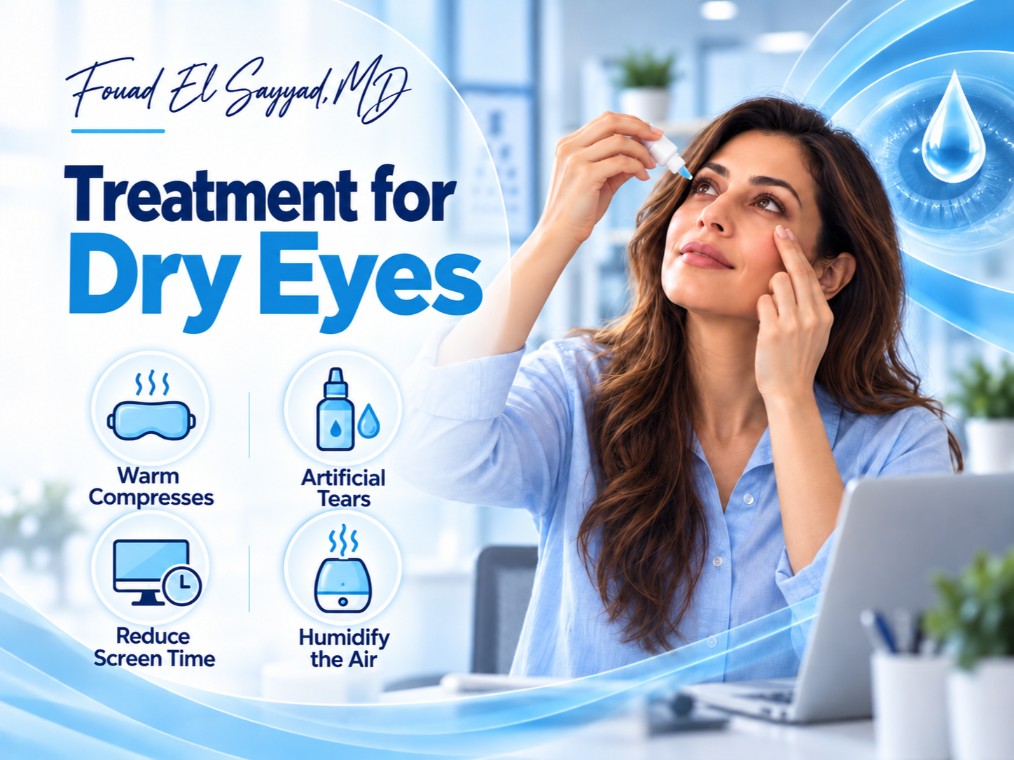
Dry eye treatment is one of the vital topics that many patients search for, especially with the growing number of dry eye cases caused by aging, prolonged screen use, or following vision correction and eye surgeries; in fact, many patients inquire about The Difference Between Femto-LASIK And SMILE Pro to choose the option with minimal post-procedure dryness. Early identification of symptoms and initiating appropriate treatment contribute to maintaining eye health and visual quality.
In this article, we review in detail dry eye treatment with Dr. Fouad El Sayyad, starting from dry eye symptoms that require a doctor's visit and the causes of severe dry eye, through appropriate dry eye treatment based on individual diagnosis, the use of drops, tear duct plugs (punctal plugs), and medications/supplements. We will also cover modern techniques such as laser dry eye treatment and intense pulsed light (IPL), recovery duration, patient experiences, the seriousness of dry eyes, and daily prevention tips.
For a broader overview of the condition, see our guide to dry eye syndrome.
This article explains dry eye treatment options, ways to manage symptoms, and the factors that affect the response to treatment.
For a related perspective, see Learn more about lasik surgery requirements.
Dry Eye Treatment with Dr. Fouad El Sayyad
Dry eye treatment is an important procedure that requires a precise evaluation to determine the root cause of dryness, whether related to decreased tear production or problems with the corneal surface. Dr. Fouad El Sayyad, Consultant Ophthalmologist holding the American Board, offers an integrated treatment plan including accurate diagnosis, selecting suitable treatment methods, and patient follow-up to monitor the response to treatment and minimize potential complications.
Dry eye treatment depends on the severity of the condition and may include simple solutions such as lubricating drops or more advanced methods like laser dry eye treatment and Intense Pulsed Light (IPL) techniques, helping restore natural eye moisture and improve vision.
The center also focuses on providing appropriate dry eye treatment tailored to each patient's needs, with meticulous follow-up to monitor ocular surface health and address persistent symptoms, with outcomes depending on the cause and severity of the condition.
What Are the Dry Eye Symptoms That Require Visiting a Doctor?
Attention must be paid to early dry eye symptoms as they indicate the need to start treatment before complications develop. Key signs requiring a doctor's visit include:
- Persistent burning or stinging sensation in the eye, resembling gritty sand.
- Chronic eye redness and visual fatigue during reading or screen use.
- Temporary blurred vision despite frequent blinking.
- Increased sensitivity to light (photophobia) and irritation from wind or dry air.
- Sudden increase in tearing as a reactive response to dryness.
With early identification of these symptoms, severe dry eye treatment can be initiated effectively, limiting potential complications on the cornea.
Causes of Severe Dry Eye
Severe dry eye occurs due to several factors that may be linked to the lacrimal apparatus or corneal surface issues. Identifying the cause is essential for choosing appropriate dry eye treatment for each case. Common causes include:
- Reduced tear secretion due to aging or lacrimal gland disorders.
- Meibomian Gland Dysfunction (MGD), responsible for secreting lipids that prevent tear evaporation.
- Autoimmune diseases such as Sjögren's syndrome, which affect tear production.
- Prolonged environmental exposure to dry air, air conditioning, or digital screens.
- Chronic inflammation or past infections affecting the eye surface.
- Wearing specialized contact lenses, such as Rigid Lenses For Keratoconus, which require specific care and constant corneal lubrication.
Understanding these causes enables the doctor to choose appropriate dry eye treatment, whether using drops or modern techniques like laser treatment, to assess treatment response over time.
Dry Eye Treatment Based on Diagnosis
appropriate dry eye treatment is determined after a careful evaluation of the patient's condition, including symptom severity, type of dryness, and examination of the lacrimal glands and corneal surface. Treatment is personalized for each patient to restore natural moisture and improve visual comfort. Key treatment options include:
Lubricating Eye Drops and Artificial Tears
- Using lubricating drops to relieve burning and dryness throughout the day.
- Long-acting artificial tears for advanced cases to reduce frequent drop usage.
- Choosing the appropriate type of drops based on dryness severity and eye composition.
Punctal Plugs to Preserve Eye Moisture
- Inserting tiny plugs into the tear ducts to prevent rapid tear drainage.
- Preserving natural eye moisture for longer periods, reducing severe dry eye symptoms.
- Typically used for cases that haven't responded to drops alone.
Anti-inflammatory Medications and Nutritional Supplements
- Anti-inflammatory drops or ointments to reduce eye irritation and protect the corneal surface.
- Nutritional supplements rich in Omega-3 fatty acids to improve lipid secretion from meibomian glands.
- These treatments help reduce dry eye symptoms, particularly for patients exploring Treating Cataracts Without Surgery to prevent additional eye irritation.
Selecting appropriate dry eye treatment depends on precise diagnosis, physician follow-up, and patient compliance to monitor treatment response over time.
Severe Dry Eye Treatment Techniques at Sayyad Eye Center
Sayyad Eye Center provides the latest technologies to treat complex cases of severe dry eye, with treatment aimed at reducing dryness and improving visual comfort, depending on the underlying cause. Key techniques include:
Intense Pulsed Light (IPL) Therapy for Dry Eye
- Uses intense light pulses to stimulate meibomian glands and improve lipid secretion.
- Reduces irritation and inflammation, aiding natural eye hydration.
- Beneficial for patients suffering from persistent severe dry eye symptoms despite conventional treatment.
Eyelid Hygiene and Treatment of Meibomian Gland Dysfunction (MGD)
- Eyelid cleansing to remove accumulated oils and dead skin cells.
- Treating MGD restores the natural balance of lipids in the tear film.
- Reduces dry eye symptoms following cataract or corrective surgeries and significantly improves eye comfort.
Duration of Dry Eye Treatment
The duration of dry eye treatment varies according to severity and cause. Mild symptoms may improve within a few weeks using lubricating drops, whereas chronic or severe cases may require several months to achieve complete moisture stability and visual comfort. When dryness is related to refractive surgery, the timeframe is heavily dependent on the Recovery Time After LASIK.
Factors influencing treatment duration include:
- Severity of symptoms and degree of tear deficiency.
- Adherence to using prescribed drops and medications.
- Response to advanced treatments like IPL or punctal plugs.
- Routine hygiene, eye care, and protection against environmental triggers.
With commitment to the treatment plan and medical support, effective results can be achieved, significantly reducing severe dry eye symptoms.
Patient Experiences with Dry Eye Treatment
Patient reviews for this procedure will be added here.
Are Dry Eyes Dangerous?
Many patients wonder about the seriousness of dry eyes, especially in chronic or severe cases. In most cases, mild dryness poses no permanent risk to vision; however, neglecting treatment or continuous exposure to triggering factors can lead to complications affecting the corneal surface and visual quality. Potential complications of severe dry eyes include:
- Corneal surface erosion, leading to painful scratches or ulcers.
- Recurrent or chronic inflammation affecting eye safety.
- Chronic blurred vision or loss of ability to perform daily activities efficiently.
- Persistent irritation causing eye fatigue and difficulty concentrating.
Therefore, early diagnosis and pursuing appropriate dry eye treatment are crucial to avoid long-term complications, answering the key question: Is dry eye dangerous if left untreated?
Dr. Fouad El Sayyad’s Tips for Home Prevention of Dry Eyes
Dr. Fouad El Sayyad provides daily tips for preventing dry eyes and minimizing uncomfortable symptoms to support any treatment plan:
- Maintain internal hydration by drinking sufficient water daily.
- Avoid direct, prolonged exposure to dry air or air conditioning.
- Take breaks during screen use and blink regularly to distribute tears across the eye surface.
- Wear protective eyewear when exposed to dust or wind.
- Use lubricating drops or artificial tears as needed to relieve temporary dryness.
- Wash and gently clean eyelids to reduce oil buildup and debris affecting lacrimal glands.
Following these daily instructions helps reduce dry eye symptoms after cataract surgery or in chronic cases, supporting long-lasting treatment outcomes.
Can Dry Eyes Be Cured Permanently?
The possibility of a complete cure for dry eyes depends on the underlying cause and severity. In mild cases or those triggered by temporary environmental factors, adhering to daily guidance and using lubricating drops can lead to near-complete recovery and restored visual comfort. However, in cases of severe dry eyes stemming from chronic conditions or MGD, patients often require ongoing monitoring and long-term care. This may include advanced techniques such as laser treatment or IPL to maintain natural hydration and prevent corneal deterioration.
The key in all cases is early diagnosis and pursuing an appropriate treatment recommended by the doctor, minimizing symptoms and monitoring long-term visual stability.
Why Choose Dr. Fouad El Sayyad for Complex Dry Eye Cases?
Dr. Fouad El Sayyad treats complex dry eye, including dry eye after refractive and cataract surgery. Dr. Fouad thoroughly evaluates each condition by analyzing all factors contributing to dry eye. Key reasons to choose Dr. Fouad El Sayyad include:
- Specialized Expertise in Severe and Complex Dry Eye Cases: Handling chronic conditions that haven't responded to traditional treatments.
- Utilization of Cutting-Edge Technologies: Such as laser treatment and IPL to rejuvenate lacrimal glands and enhance natural eye moisture.
- Personalized Treatment Plans: Customized for each patient, incorporating lubricating drops, artificial tears, punctal plugs, and nutritional supplements based on severity.
- Meticulous Post-Treatment Follow-up: Monitoring the response to treatment and minimizing severe dry eye symptoms or potential complications like corneal inflammation.
- Patient Education & Guidance: Offering daily recommendations for home care, such as protecting eyes from wind and dust and reducing screen fatigue.
- Combining Pharmacological & Modern Technical Therapies: To achieve optimal results in restoring natural moisture and enhancing vision quality.
- Focus on Patient Physical & Psychological Experience: Sharing realistic recovery steps to encourage commitment to the treatment plan.
By choosing Dr. Fouad El Sayyad, patients receive comprehensive care focused on recovery from severe dry eye, protecting the corneal surface, reducing complications, and achieving clear, sustainable vision.
Conclusion
Ultimately, dry eye treatment is an integrated process requiring accurate diagnosis, selecting the appropriate treatment, and adhering to medical advice throughout recovery. Whether dryness is mild or severe, following medical guidelines and leveraging modern technologies such as laser therapy and IPL helps restore natural eye moisture, reduce potential complications, and improve vision quality.
Dr. Fouad El Sayyad’s expertise, precise recommendations, and continuous follow-up aim to give lasting relief.
If you are looking for a comprehensive evaluation and specialized dry eye treatment, you can book an appointment with Dr. Fouad El Sayyad — Consultant Ophthalmologist (American Board) — at his medical center to receive a tailored treatment plan.
References
This article is for general education and does not replace an eye examination. Treatment decisions depend on your own eye assessment.
FAQS
-
Does dry eye cause allergies?
Yes, dry eyes can increase eye sensitivity to dust, wind, and light, and may lead to chronic irritation if not treated appropriately.
-
What are the symptoms of severe dry eye?
Symptoms include burning or stinging sensations inside the eye, chronic redness, temporary blurred vision, increased tearing in response to dryness, and sensitivity to light and wind.

Book an Eye Consultation Appointment | Dr. Fouad El Sayyad
Book now