
Many people enjoy clear distance vision for most of their life, then suddenly notice that reading small print, using a mobile phone, or working on a computer becomes more difficult after the age of 40. This condition is called presbyopia, and it is a normal age-related change in near vision.
For many patients, the first solution is reading glasses. However, some people prefer to reduce their dependence on reading glasses if their eyes are suitable. One of the modern laser-based options for selected patients is Presbyond Laser Blended Vision.
Presbyond is a specialized form of laser vision correction designed to improve the range of vision, including distance, intermediate, and near vision, in carefully selected patients. It is not the same as standard Femto-LASIK, Femto-SMILE, or PRK, and it is not suitable for everyone. A detailed eye examination, corneal assessment, and realistic discussion of expectations are essential before deciding whether this treatment is appropriate.
Related reading: lasik surgery requirements; smile pro: key details; the difference between lasik and surface laser.
What Happens to Near Vision After 40?
After the age of 40, many people begin to notice difficulty focusing on near objects. Common symptoms include:
- Holding the phone farther away to read clearly
- Needing brighter light for reading
- Eye strain when reading for long periods
- Difficulty reading medicine labels or restaurant menus
- Blurry near vision after prolonged computer work
- Switching between distance and near focus more slowly
- Needing reading glasses despite having good distance vision
This change usually happens gradually and continues over time. It affects almost everyone, even people who never needed glasses when they were younger.
What Is Presbyopia?
Presbyopia is the gradual loss of the eye’s natural ability to focus on near objects. It happens because the natural lens inside the eye becomes less flexible with age.
When we are younger, the lens can change shape easily to focus on near objects. This process is called accommodation. As the lens becomes less flexible, the eye finds it harder to focus up close, so reading and near tasks become more difficult.
Presbyopia is not a disease. It is a normal aging change. However, it can affect daily life significantly, especially for people who work on screens, read often, use mobile phones frequently, or want to reduce dependence on glasses.
What Is Presbyond Laser Blended Vision?
Presbyond Laser Blended Vision is a laser vision correction technique designed to increase the functional range of vision in selected patients with presbyopia.
The idea is to create a blended visual system. One eye is usually optimized more for distance vision, while the other eye is adjusted to help more with near vision. The brain combines the images from both eyes to create a smoother range of vision from far to near.
This is different from classic monovision, where one eye is corrected strongly for distance and the other strongly for near. Presbyond aims to create a more blended transition between the two eyes, so the patient may tolerate the difference better than traditional monovision.
The goal is not necessarily to eliminate reading glasses completely in every situation. The goal is to reduce dependence on reading glasses and improve daily function across different distances.
How Is Presbyond Different from Standard Laser Vision Correction?
Standard laser vision correction procedures, such as Femto-LASIK, Femto-SMILE, or PRK, are usually designed to correct distance vision. They can treat myopia, hyperopia, and astigmatism in suitable patients, but they do not stop the natural aging process of near vision.
Presbyond is different because it is specifically planned for patients with presbyopia. It aims to improve the range of vision rather than simply correcting both eyes for perfect distance vision.
For example, a standard distance correction may help a 45-year-old patient see far objects clearly without glasses, but the same patient may still need reading glasses afterward. Presbyond tries to address both distance and near function by using a blended vision strategy.
Who May Be Suitable for Presbyond?
Presbyond may be suitable for selected patients who are over 40 and want to reduce their dependence on reading glasses.
Possible candidates may include patients who:
- Have presbyopia and difficulty with near vision
- Want to reduce dependence on reading glasses
- Have a stable glasses prescription
- Have healthy corneas
- Have adequate corneal thickness
- Have no signs of keratoconus or corneal weakness
- Have controlled dry eye or a healthy tear film
- Can tolerate a blended vision strategy
- Understand the benefits and limitations of the procedure
- Have realistic expectations about near, intermediate, and distance vision
Presbyond may be considered in selected patients with myopia, hyperopia, astigmatism, or emmetropia depending on the full eye assessment and treatment plan.
Who May Not Be Suitable for Presbyond?
Presbyond is not suitable for everyone. Some patients may not tolerate blended vision well, while others may have eye conditions that make laser vision correction unsuitable.
Patients may not be suitable if they have:
- Unstable glasses prescription
- Significant dry eye that is not controlled
- Keratoconus or suspected corneal weakness
- Very thin corneas
- Irregular corneal shape
- Significant cataract
- Retinal disease affecting vision
- Advanced glaucoma or optic nerve disease
- Strong dependence on perfect binocular distance sharpness
- Occupations or hobbies requiring highly precise night vision
- Unrealistic expectations about completely eliminating glasses
In some patients, lens-based options may be more appropriate than laser treatment, especially if early cataract or lens changes are present.
Why Expectations Are Important Before Presbyond
Expectation management is one of the most important parts of Presbyond planning.
Presbyond can reduce dependence on reading glasses in suitable patients, but it does not make the eyes young again. Presbyopia continues to progress with age, and some patients may still need glasses for very small print, prolonged reading, dim lighting, or detailed near work.
Patients also need to understand that the two eyes may not feel exactly the same after treatment. One eye may be stronger for distance, and the other may contribute more to near vision. The brain usually adapts, but adaptation varies from person to person.
The goal is functional freedom from glasses for many daily activities, not a guarantee of perfect unaided vision at every distance and in every lighting condition.
What Tests Are Needed Before Presbyond?
A detailed eye examination is essential before Presbyond. The purpose is to confirm whether the eyes are healthy, whether the cornea is suitable for laser correction, and whether the patient is likely to tolerate blended vision.
The evaluation may include:
- Measurement of uncorrected vision
- Measurement of best corrected visual acuity
- Careful refraction
- Dominant eye testing
- Corneal topography or tomography
- Corneal thickness measurement
- Tear film and dry eye assessment
- Pupil assessment
- Screening for keratoconus or corneal irregularity
- Assessment of the crystalline lens for early cataract changes
- Retinal and optic nerve examination when needed
- Discussion of work habits, screen use, night driving, and reading needs
In some cases, the doctor may recommend a contact lens simulation or trial to help the patient experience a blended vision effect before deciding on surgery.
Why Dominant Eye Testing Matters
Dominant eye testing is especially important in Presbyond planning. Most people have one eye that the brain naturally prefers for distance tasks. This is usually called the dominant eye.
In many blended vision strategies, the dominant eye is usually planned more for distance vision, while the non-dominant eye is adjusted to support near vision. This helps the brain combine the images from both eyes more comfortably.
However, this is not automatic for every patient. The exact treatment plan depends on the examination, prescription, visual goals, and how the patient responds to trial correction.
What Happens During the Presbyond Procedure?
Presbyond is performed using laser vision correction technology. The eye is numbed with anesthetic eye drops, and the patient remains awake during the procedure.
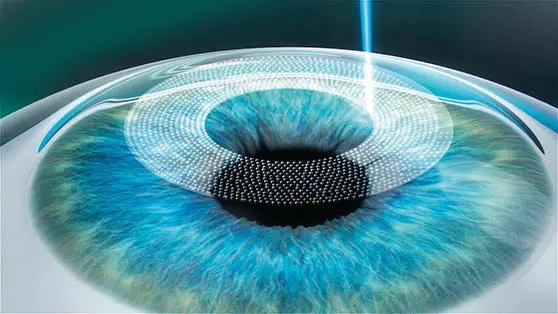
Depending on the patient’s eye and the surgeon’s plan, the treatment is usually performed as a corneal laser procedure. The laser reshapes the cornea according to a customized plan designed to improve the range of vision.
The procedure itself is usually quick, but the patient spends additional time at the clinic for preparation, checks, and postoperative instructions.
Recovery After Presbyond
Recovery after Presbyond varies from patient to patient. Many patients notice improvement in functional vision within the early recovery period, but adaptation to blended vision may take time.
During the first days or weeks, patients may experience:
- Fluctuating vision
- Mild dryness
- Glare or halos, especially at night
- Difference in clarity between the two eyes
- Mild eye strain during adaptation
- Needing time for the brain to adjust to the new visual balance
These symptoms often improve with healing and adaptation, but recovery is individual. Follow-up visits are important to monitor healing and adjust postoperative treatment when needed.
Will I Still Need Reading Glasses After Presbyond?
Some patients may still need reading glasses for certain tasks after Presbyond. This is especially true for very small print, prolonged reading, low-light situations, or highly detailed near work.
However, the goal of Presbyond is to reduce the need for reading glasses in daily life. Many suitable patients are able to use their phone, read menus, work on a computer, and perform routine near tasks with less dependence on glasses.
It is important to understand that “less dependence on glasses” is a more realistic goal than “never needing glasses again.”
Presbyond vs Monovision
Traditional monovision corrects one eye for distance and the other eye for near. While this can work well for some patients, others may find the difference between the two eyes uncomfortable.
Presbyond uses a blended vision approach designed to create a smoother transition between distance and near vision. The aim is to improve the range of vision while maintaining better visual comfort than strong traditional monovision in suitable patients.
However, tolerance still varies. This is why trial correction and careful counseling are important before treatment.
Presbyond vs Multifocal Contact Lenses
Multifocal contact lenses can help some patients with presbyopia, but not everyone tolerates them well. Some patients experience dryness, glare, reduced contrast, or difficulty with night vision.
Presbyond is different because it reshapes the cornea with laser treatment rather than relying on a contact lens. However, unlike contact lenses, laser treatment is not easily reversible, so patient selection and expectation management are very important.
Presbyond vs Lens Replacement Surgery
For some patients over 40 or 50, especially those with early cataract or significant lens changes, lens-based surgery may be more appropriate than corneal laser treatment.
Lens replacement surgery involves removing the natural lens and replacing it with an intraocular lens. This may be considered in selected patients, particularly when cataract is present or when the natural lens is already affecting vision.
Presbyond is usually more relevant for patients whose corneas are suitable and whose natural lenses are still clear enough. The decision between corneal laser treatment and lens-based surgery requires a full eye examination.
Is Presbyond Safe?
Presbyond can be safe and effective in carefully selected patients when performed after detailed screening and planning. However, like any medical procedure, it carries potential risks and limitations.
Possible issues may include dryness, glare, halos, undercorrection, overcorrection, difficulty adapting to blended vision, or the need for enhancement in selected cases.
Safety depends on proper patient selection, accurate measurements, healthy corneas, realistic expectations, and close follow-up.
Frequently Asked Questions About Presbyond
What is Presbyond Laser Blended Vision?
Presbyond Laser Blended Vision is a laser vision correction approach designed to improve the range of vision in selected patients with presbyopia. It usually creates one eye more focused for distance and the other eye more supportive for near vision, with a blended transition between the two.
Is Presbyond the same as LASIK?
No. Presbyond is not simply standard distance laser correction. It is a specialized treatment plan for presbyopia and blended vision. It may be performed using corneal laser technology, but the goal is different from standard distance correction.
Can Presbyond get rid of reading glasses completely?
It may reduce dependence on reading glasses, but it cannot guarantee that you will never need reading glasses. Some patients may still need glasses for small print, long reading sessions, or dim light.
Who is the best candidate for Presbyond?
A good candidate is usually over 40, has presbyopia, has healthy eyes and corneas, has a stable prescription, and can tolerate blended vision. Suitability must be confirmed by a full examination.
Can Presbyond treat distance and near vision?
Presbyond is designed to improve the range of vision, including distance, intermediate, and near vision. The exact result depends on the patient’s eyes, prescription, and adaptation.
Is adaptation needed after Presbyond?
Yes. Because Presbyond uses a blended vision strategy, the brain may need time to adapt to the new balance between the two eyes. Some patients adapt quickly, while others need more time.
Is Presbyond suitable for night driving?
Some patients do well with night driving after Presbyond, while others may notice glare, halos, or reduced sharpness, especially during early healing. Patients with demanding night-driving needs should discuss this carefully before surgery.
Is Presbyond suitable if I have cataract?
If cataract is present and affecting vision, lens-based surgery may be more appropriate than Presbyond. A full examination is needed to decide.
Can I try Presbyond before surgery?
In some cases, the doctor may recommend a contact lens simulation or trial correction to help you experience blended vision before deciding on surgery.
Is Presbyond permanent?
The corneal laser correction is intended to be long lasting. However, the eye continues to age. Presbyopia can progress, and cataract may develop later in life, which can affect vision.
Conclusion
Presbyond Laser Blended Vision is a modern option for selected patients over 40 who want to reduce dependence on reading glasses. It is designed to improve the range of vision by using a blended vision strategy between the two eyes.
However, Presbyond is not suitable for everyone. The best results depend on careful patient selection, healthy corneas, accurate measurements, realistic expectations, and the ability to adapt to blended vision.
If you are considering laser vision correction after 40, the most important first step is a full eye examination to determine whether Presbyond, Femto-LASIK, Femto-SMILE, PRK, or a lens-based option is the most suitable choice for your eyes.

Book an Eye Consultation Appointment | Dr. Fouad El Sayyad
Book now